How Perimenopause Affects Sleep Architecture and What Helps
Hormonal shifts in early perimenopause degrade sleep quality before hot flashes appear.
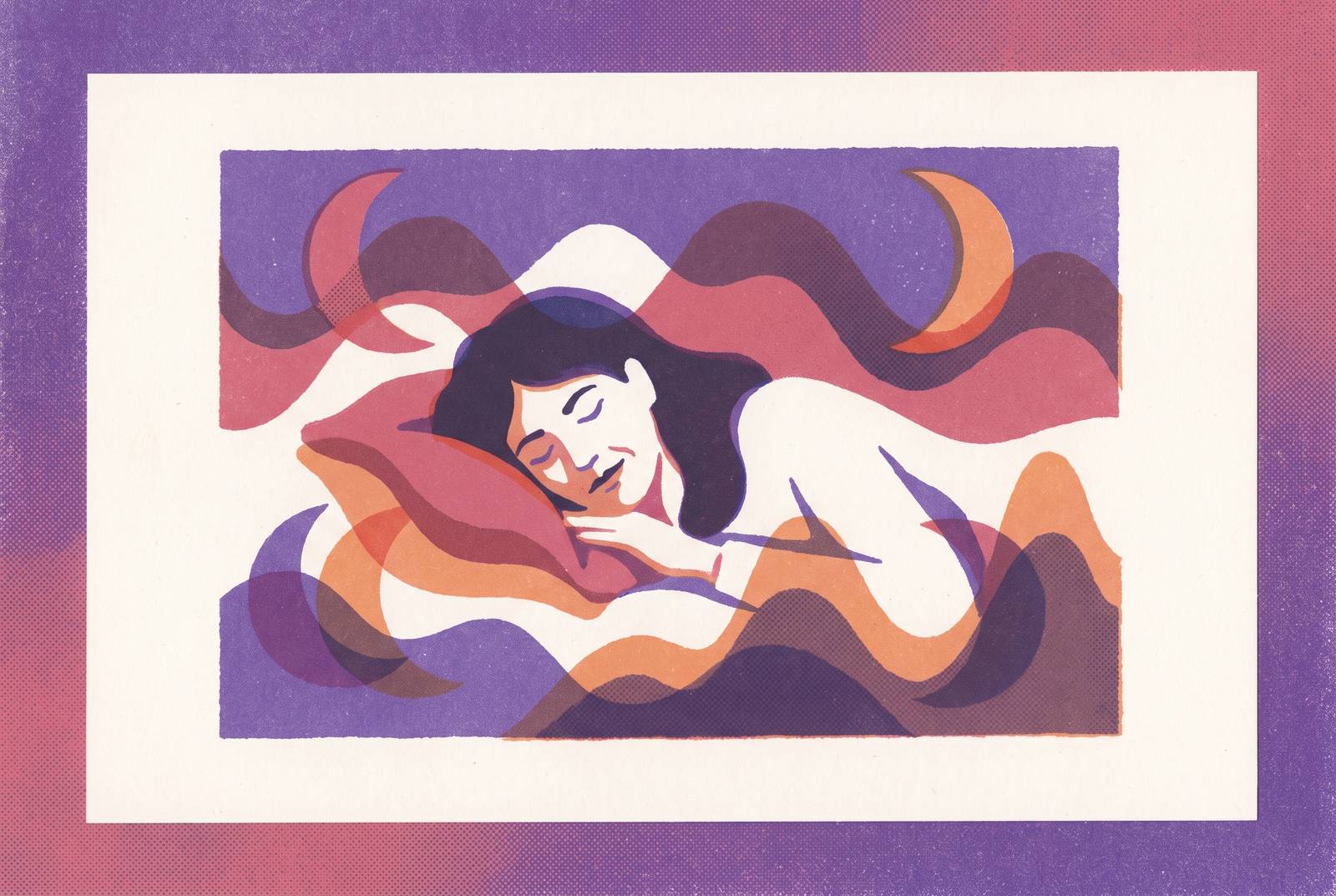
Perimenopause does not merely make sleep uncomfortable. It alters the underlying architecture of sleep: the sequencing, depth, and consolidation of REM and slow-wave stages, through hormonal mechanisms that operate independently of hot flashes. The distinction matters because it changes what counts as an adequate response.
Sleep architecture refers to the organized cycling of sleep stages. These stages include light NREM, slow-wave deep sleep, and REM, and they repeat in predictable cycles across the night. The cycling itself has come apart.
Polysomnography recordings of perimenopausal women show physiological hyperarousal during sleep and greater wake after sleep onset. The most consistent objective finding is increased awakenings after sleep onset. A woman may be in bed for the same number of hours she always was, yet the internal organization of those hours has deteriorated. That is the peculiar cruelty of the perimenopausal sleep problem: it often hides inside a normal-looking night.
The clearest evidence that this is not a comfort problem comes from women who do not have vasomotor symptoms. The root cause is hormonal fluctuation and gradual gonadal hormone reduction, and it begins earlier than most clinical conversations acknowledge. Sleep disruption is highly prevalent during perimenopause, driven by that fluctuation, and it can persist or worsen into postmenopause.
How the hormonal sequence of perimenopause unfolds and why the order matters for sleep
The hormonal changes of perimenopause are not a smooth, simultaneous decline. They follow a sequence, and the order of that sequence explains why sleep disruption can arrive before the hot flashes most women think of as the official start of the transition. Progesterone falters first, driven by dysregulated ovulation in early perimenopause. Falling estrogen then disrupts feedback to the hypothalamus and pituitary, causing FSH to rise progressively through the transition. Late perimenopause is characterized by FSH levels at or above 25 IU/L, marking the cessation of regular follicular development and ovulation.
Why exactly does that order matter? Because each of those hormonal changes has its own effect on sleep, and the effects begin at different points. A woman in early perimenopause may already have lost much of the sleep-protective action of progesterone, even while her estrogen levels still look relatively intact on a single blood draw. The architecture problem is already underway. By the time FSH has risen to postmenopausal levels, the transition has been in motion for months or years.
The fluctuation pattern is as important as the absolute decline. Some researchers have found that it is the fluctuations and degree of change in estrogen, not the absolute level, that are associated with sleeping problems. The brain is responding not to a steady state but to a signal that keeps changing direction.
KNDy neurons, named for kisspeptin, neurokinin B, and dynorphin, sit in the hypothalamus and are sensitive to estrogen. They connect the reproductive hormone system with circuits controlling both body temperature and the sleep-wake cycle. The sleep disturbance is not downstream of the hot flash. Both run, in part, through the same disrupted circuitry.
This biological logic reframes the common clinical question. The sequence says otherwise. Progesterone dysfunction precedes the obvious estrogen collapse, and the sleep effects track the earliest phase of that sequence.
What progesterone was doing for sleep and what its loss removes
Progesterone is not a passive bystander in sleep. It acts through GABA-A receptor modulation to promote deep, consolidated sleep, and its decline in early perimenopause removes a physiological regulator that conventional sleep medications cannot replicate. Progesterone's breakdown metabolites interact directly with GABA-A receptors. In other words, the body produces its own mild endogenous sedative, and perimenopause takes it away.
The anxiolytic and sedative effects of progesterone contribute to sleep consolidation. Its decline reduces intrinsic sleep-promoting activity. She notices that sleep, which used to be deep and continuous, now feels thin and easily broken.
Progesterone also interacts with the nighttime secretion of growth hormone, thyroid-stimulating hormone, and melatonin. These hormones are part of a coordinated nocturnal rhythm, and that rhythm becomes disrupted as ovarian production fluctuates. Progesterone sits inside a broader nocturnal endocrine program, and its withdrawal disturbs the program as a whole.
One clinical insight is particularly revealing. In research, progesterone had minimal effect on undisturbed sleep but significantly improved sleep when it was fragmented. Conventional hypnotics tend to suppress deep sleep, whereas progesterone appears to enhance slow-wave sleep. The loss of progesterone is therefore qualitatively different from ordinary insomnia. It is the removal of a system that protected the deepest, most restorative stages of sleep.
Progesterone also functions as a respiratory stimulant and enhances pharyngeal dilator muscle tone. That role matters for a section of this argument that arrives later. Its loss during perimenopause is one mechanism through which sleep apnea risk rises.
What estrogen does to sleep regulation directly, beyond body temperature
Estrogen acts directly on sleep-regulatory brain regions and neurotransmitter systems to reduce awakenings and maintain deep sleep phases. The thermostat story is true as far as it goes. It does not go far enough.
Estrogen receptors are present throughout brain regions involved in sleep regulation. They are found in the preoptic area of the hypothalamus and in the suprachiasmatic nucleus, which is the master circadian clock. Through these regions, estrogen inhibits neurotransmitters involved in awakening. Those include acetylcholine, histamine, noradrenaline, serotonin, orexin, and dopamine. The effect is direct: by dampening the chemical signals that promote waking, estrogen decreases sleep latency and reduces the number of awakenings. When estrogen fluctuates erratically in perimenopause, that inhibitory control becomes unstable. The waking systems fire more readily, and sleep fragments in response.
The fluctuation of estrogen, not just its absolute level, drives those sleeping problems. A stable low estrogen level would be one kind of challenge. When those signals become erratic, the circuit's output becomes erratic as well.
One might argue that estrogen's thermoregulatory role is still the dominant mechanism for most women, and the direct neurological effects are secondary. The evidence complicates that view. But they are one branch of the mechanism, not the trunk.
FSH as an independent driver of sleep fragmentation, not just a marker of transition
FSH, or follicle-stimulating hormone, is usually discussed as a diagnostic marker. It tells the clinician how hard the pituitary is working. But rising FSH independently disrupts sleep architecture in ways that begin early in the perimenopausal transition, before hot flashes are prominent. That makes it a clinically important signal that is routinely overlooked in conversations about menopausal sleep.
As the ovaries become less responsive, the pituitary produces more FSH in an attempt to stimulate follicular development. FSH rises progressively throughout the transition. It is not merely a bystander that happens to correlate with the other hormonal changes. The window of impact starts earlier than most clinical conversations acknowledge.
That raises an important question. If FSH begins disrupting sleep early in the transition, why do most women and most clinicians only start paying attention when the hot flashes arrive? FSH testing is typically done only when a clinician is trying to confirm menopause, not when a woman in her mid-forties complains of fragmented sleep.
FSH testing is most accurate on cycle day 2 to 4. The measure is a trajectory, not a single data point. That will matter again in the final section of this piece, where the tracking argument comes together.
Sleep apnea as a perimenopausal risk that masquerades as ordinary hormonal fatigue
The same hormonal changes that fragment sleep architecture also increase the risk of obstructive sleep apnea. Because the symptoms of sleep apnea in women overlap almost entirely with perimenopausal symptoms, it is systematically missed in clinical practice. That overlap is not a small practical inconvenience. It is a diagnostic blind spot with real consequences.
Progesterone is a respiratory stimulant and enhances pharyngeal dilator muscle tone. Estrogen contributes to neuromuscular stability and fat distribution. Both mechanisms become compromised in perimenopause. Postmenopausal women are materially more likely to develop sleep apnea than premenopausal women.
The diagnostic risk runs in both directions. A clinician who attributes all fatigue and nighttime waking to perimenopause will miss the apnea. Neither approach addresses the full picture.
The practical implication is worth stating plainly. A woman whose sleep remains non-restorative despite addressing hormonal factors should raise sleep apnea explicitly with her clinician. The overlap is the problem, and naming it explicitly is the first step past it.
Why disrupted sleep in perimenopause is a cardiovascular risk, not just a quality-of-life complaint
Persistent sleep disruption during the perimenopause window is independently associated with increased cardiovascular risk. That claim is rarely communicated to patients, and the omission matters. The stakes are higher than most women are told.
Poor sleep health during this period is associated with increased cardiometabolic risks and adverse cardiovascular outcomes. It sits alongside blood pressure, glucose, and lipids as a measure of a heart's prospects. A woman whose sleep architecture is fragmented for years is carrying a cardiovascular burden, not merely a mood and energy burden.
Perimenopause represents a critical window for that risk. The perimenopausal years are when the trajectory is being set. A woman who intervenes during the transition is acting at the point of maximum leverage.
This connection is rarely communicated in clinical settings. That is the point at which this argument turns. The mechanisms have been described, the stakes have been set, and the question becomes what can be done.
What menopausal hormone therapy does and does not do for sleep architecture
Menopausal hormone therapy addresses the hormonal mechanisms driving sleep disruption directly. The logic of the treatment follows from the mechanism. MHT is not a sleep aid in the conventional sense. It is an attempt to restore the regulatory system that conventional sleep aids cannot replicate.
Some forms of progesterone have stronger sleep evidence than others. Micronized progesterone, in particular, carries the sleep-architecture evidence because of its interaction with GABA-A receptors. The form, the dose, and the timing within the treatment regimen all shape the effect.
The field does not yet have a definitive answer on how MHT compares to behavioral approaches. The "No More Sleepless Nights in Perimenopause" trial, published in Trials in 2025, similarly investigates hormone replacement therapy versus cognitive behavioral therapy for insomnia in perimenopausal women with vasomotor symptoms and insomnia. It is an open-label, randomized, parallel-group, active-controlled study. Both trials reflect how thin the direct randomized controlled trial evidence remains.
The two pending trials together signal something important about where the field stands. Data without expert interpretation is not enough. The honest framing is that MHT addresses the mechanism directly but requires individualized judgment about whether it is the right tool for a given woman.
What CBT-I does for perimenopausal sleep and how it works differently from hormone therapy
Cognitive behavioral therapy for insomnia has the strongest current evidence base for improving sleep quality in menopausal women. A 2025 meta-analysis of eleven randomized controlled trials found that CBT-I significantly improved sleep quality and reduced insomnia severity. The evidence is not marginal. It is the most robust behavioral evidence available for this population.
CBT-I works through mechanisms that are entirely separate from hormonal pathways. It addresses sleep behavior, sleep drive, and cognitive patterns around sleep. None of these tools touches estrogen or progesterone. They work on the behavioral and cognitive layer of the sleep system.
That separation is the source of the complementarity. A woman with active hormonal fluctuation driving nighttime awakenings could benefit from restoring the hormonal regulator and from strengthening the behavioral sleep system at the same time. The two interventions do not compete for the same pathway.
The "Sleeping Through Menopause" trial's CBCTi arm adds circadian behavior alongside cognitive restructuring. Circadian support works on the timing system: consistent sleep and wake times, morning light exposure, and limits on late-night light. The trial treats the circadian component as an active target, not a footnote.
CBT-I is accessible in multiple formats, including internet-based programs. The therapy is not a luxury confined to academic sleep centers. It is deliverable at scale, and the evidence supports its effectiveness across delivery formats.
The honest objection is worth acknowledging. A woman whose dominant problem is cognitive arousal around sleep may respond beautifully to CBT-I. A woman whose dominant problem is unstable hormonal signaling may need hormone therapy first, with CBT-I as the complementary layer.
What sleep hygiene and environmental changes can and cannot address
Environmental and behavioral sleep hygiene measures can meaningfully reduce the burden of perimenopausal sleep disruption. But they operate at the symptom level rather than the hormonal mechanism level. They should be understood as supportive rather than curative.
Thermoregulatory interventions have a clear rationale. A cool sleeping environment and moisture-wicking bedding address the vasomotor symptom pathway. The distinction is not a criticism of cooling strategies. It is a clarification of what they are for.
Circadian support is a different category. These measures do more than manage symptoms. They support a regulatory system that is under strain.
The honest framing matters. Sleep hygiene manages the surface. Clinical intervention addresses the mechanism underneath.
How hormone tracking helps distinguish what is driving the disruption and what to do about it
Because the hormonal drivers of sleep disruption vary by stage of perimenopause and by individual pattern, a single snapshot test is insufficient. Tracking hormone levels over time is what reveals whether the dominant problem is early progesterone loss, estrogen fluctuation, rising FSH, or a combination. That specificity is what makes intervention choices meaningful.
FSH must be tested on cycle day 2 to 4 for accuracy. Two tests taken 4 to 6 weeks apart are more informative. The trajectory matters more than any isolated value. A woman whose FSH is climbing between two tests has different information than a woman whose FSH is stable, even if both tests fall within the same range.
Tracking menstrual cycle length over months adds another dimension. Shortening cycles are among the first objective signs of perimenopause. The diary captures what the blood test cannot: the day-to-day variability that is the signature of this transition.
A normal FSH result does not invalidate the clinical picture in a woman over 45 with changing cycles and sleep disruption. The transition is a process. Confusing the two is how women end up being told that everything looks fine while their sleep architecture is quietly deteriorating.
The practical endpoint is self-advocacy. The complexity of perimenopausal sleep disruption is not a reason to give up on precision. It is the reason precision is the only adequate response.
Sources
- Sleep Disturbance and Perimenopause: A Narrative Review
- Sleep Disturbance and Perimenopause: A Narrative Review
- University of South Carolina University of South Carolina Scholar Commons
- Knowledge, attitude, and practice toward sleep disorders and sleep hygiene among perimenopausal women
- No More Sleepless Nights in Perimenopause
- Investigation of the quality of life and influencing factors among perimenopausal women
- Sleep Disturbance in Perimenopausal Women