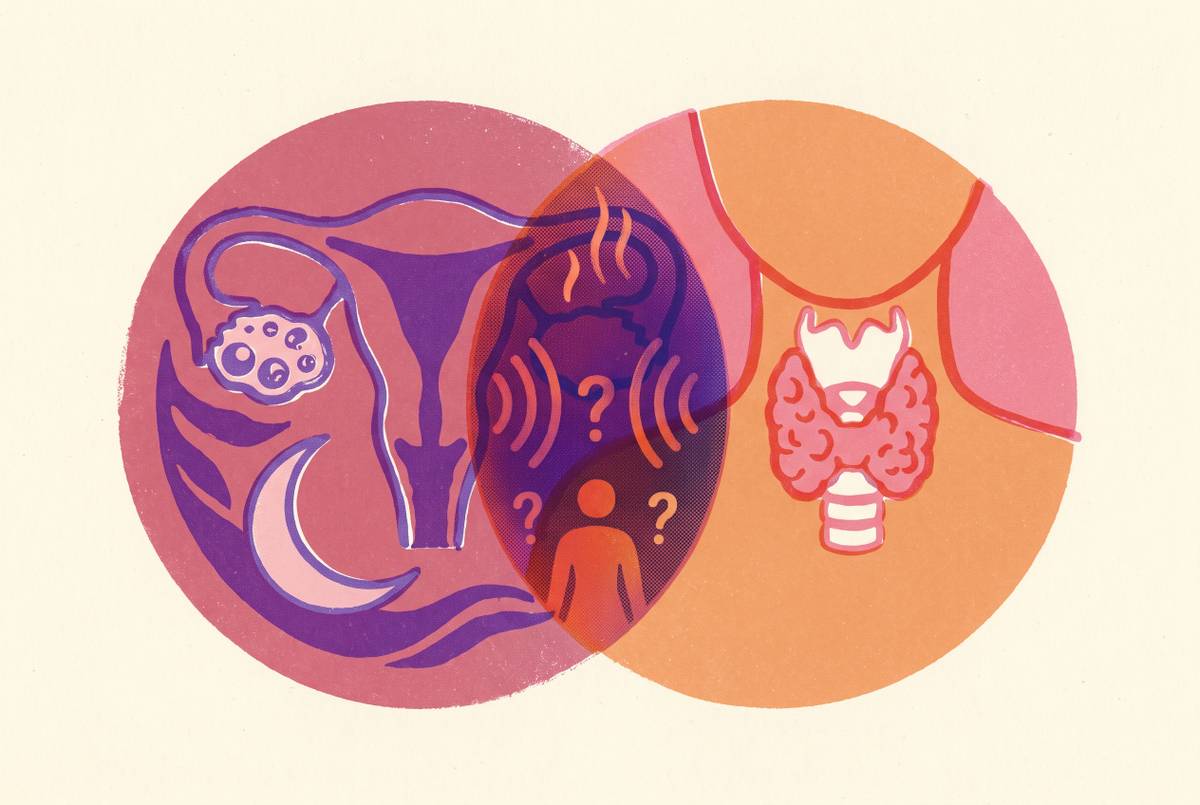
Bioidentical HRT vs Conventional HRT for Perimenopause
FDA-approved bioidentical hormones differ fundamentally from compounded ones in safety and evidence.

Bioidentical and conventional HRT for perimenopause fall into three groups that differ in how they are regulated, what evidence supports them, and who they fit. FDA-approved bioidentical hormones, conventional synthetic hormones, and compounded BHRT are not interchangeable categories. Intermission Health offers a starting point for women seeking clinician-reviewed, longitudinal hormone data to bring to that discussion, rather than treating a marketing label or a single blood test as the answer.
Why "bioidentical vs. conventional" is the wrong question
Wellness influencers, celebrity endorsements, and the fear surrounding HRT after the Women’s Health Initiative have helped make “bioidentical” sound like the opposite of conventional medicine. That framing turns a question about treatment into a choice between competing identities. Yet “bioidentical” describes molecular structure, meaning chemical identity to hormones the body produces. It does not describe a product’s origin, regulatory status, or safety.
So the same word can describe both an FDA-approved medicine and a custom-compounded preparation that has not had the same review. Synthetic hormones differ structurally from endogenous hormones, and those differences have pharmacological consequences.
The three categories women actually need to distinguish
The first category is FDA-approved bioidentical hormones. These contain hormones that are chemically identical to endogenous hormones, are tested for safety and efficacy before they reach the market, and are made under FDA Good Manufacturing Practice standards. Examples include estradiol patches such as Vivelle-Dot, Climara, and Minivelle, gels such as Divigel and EstroGel, and the spray Evamist. Oral micronized progesterone is available as Prometrium, while Bijuva is a combination capsule. These products have standardized dosing and verified batch-to-batch consistency, and most insurance plans cover them.
The second category is conventional synthetic hormones. These are structurally similar but not molecularly identical to endogenous hormones, with conjugated equine estrogens and medroxyprogesterone acetate as the primary examples. Premarin contains conjugated equine estrogens derived from pregnant mares’ urine, while Provera contains medroxyprogesterone acetate. The Women’s Health Initiative used these formulations, so much of the large-scale historical safety evidence concerns them specifically. The differences in their structure affect receptor binding, metabolic pathways, and the side effects they can cause.
The third category is compounded bioidentical hormones, often called cBHRT. Pharmacies custom-mix these for individual prescriptions, and the finished products do not undergo FDA pre-market review for safety, efficacy, or quality. Delivery forms include capsules, sublingual troches, creams, patches, pellet implants, and vaginal suppositories. Although the raw hormone molecule may be bioidentical, documented batch variability means doses can differ substantially. Compounding pharmacies represent a substantial share of the hormone therapy market, making this distinction relevant beyond unusual prescribing situations.
What the February 2026 FDA label changes actually changed
On February 12, 2026, the FDA approved label changes to six menopausal hormone therapy products, removing boxed warnings about heart disease, breast cancer, and dementia. Four of those products, namely Prometrium, Divigel, Estring, and Bijuva, are bioidentical. The warnings originated from the Women’s Health Initiative. The FDA found that the risk was first overstated for women who were well suited to treatment and began it near the onset of menopause.
The FDA also removed the longstanding instruction to use the lowest dose for the shortest time. That directive had contributed to undertreatment of perimenopausal women for two decades. Updated labeling notes that randomized studies show reductions in all-cause mortality and fractures among women who begin systemic hormone therapy within the appropriate window.
El Khoudary and colleagues’ 2026 target trial emulation study in JAMA Internal Medicine used SWAN data to add evidence on when women start treatment. Among perimenopausal and recently postmenopausal women who had vasomotor symptoms and no cardiovascular disease, starting hormone therapy was linked to a 22% reduction in cardiovascular events overall. Women who started within a decade of the onset of menopause showed the greatest benefit, while those who started more than a decade afterward showed no cardiovascular benefit. The study also reported a modestly increased breast cancer risk among initiators, preserving the need for individualized assessment. Neither that association nor the label changes grants compounded preparations the regulatory standing or evidence base of FDA-approved formulations.
Where FDA-approved bioidentical hormones stand on safety relative to synthetic hormones
The molecule-level comparison begins with a narrower question than whether bioidentical hormones are safer. It asks which hormone, compared with which alternative, produces which outcome. Micronized progesterone has a more favorable breast-cancer signal than synthetic progestins such as medroxyprogesterone acetate, or MPA, when combined with estrogen. That finding applies specifically to the progestogen component.
Transdermal estradiol bypasses the first-pass hepatic metabolism that oral conjugated estrogens undergo, a difference associated with a lower risk of blood clots and stroke for transdermal estradiol compared with oral synthetic estrogen formulations. Because this comparison changes both the molecule and its delivery route, it cannot establish that molecular identity alone explains the difference.
Micronized progesterone also has a distinct metabolic pathway. Taken orally, it produces allopregnanolone, a positive GABA-A modulator associated with improvements in sleep quality. Synthetic progestins do not produce that downstream effect.
The evidence nevertheless has limits. Most large-scale randomized safety data, including the Women’s Health Initiative, come from studies of synthetic formulations, while many bioidentical-versus-synthetic comparisons draw on observational data and meta-analyses. Effectiveness for hot flashes, night sweats, vaginal dryness, and bone protection is comparable between the categories. The groups differ in some safety signals, side effects, and metabolic pathways, and when treatment starts matters whichever molecule is chosen.
Why compounded BHRT is a separate and weaker category
Those findings do not automatically apply to compounded BHRT just because its ingredients have the same molecular names as those in approved medicines. Evidence for a regulated formulation concerns more than the molecule in isolation. It also concerns a product with standardized dosing and manufacturing controls. A preparation with inconsistent dosing cannot simply inherit the clinical standing of that product.
The National Academies found a lack of rigorous evidence for the safety and effectiveness of compounded bioidentical hormone therapy, together with concerns about dosing consistency and purity. ACOG’s November 2023 Clinical Consensus No. 6 states that compounded bioidentical menopausal hormone therapy should not be prescribed routinely when FDA-approved formulations exist. The Menopause Society’s 2022 Hormone Therapy Position Statement identifies minimal oversight, dosing errors, impurities, and missing efficacy data as safety concerns. The British Menopause Society likewise notes that claimed benefits have largely been extrapolated from regulated bioidentical hormones and that evidence does not justify the multiple serum and saliva tests often used to individualize compounded treatment. Saliva hormone testing is not validated as a clinical tool for this purpose.
There are legitimate exceptions rather than grounds for dismissing every compounded prescription. NASEM reserved compounded BHRT for documented allergies to active ingredients or excipients in approved products, or for doses and formulations unavailable commercially. A 2026 estrogen patch supply shortage has also pushed some women toward compounding out of necessity. Those circumstances are different from unsupported claims that compounded treatment is inherently “more natural” or “more personalized,” particularly because careful dose titration is possible with approved products.
How delivery route affects outcomes within the bioidentical category
Even among FDA-approved bioidentical hormones, delivery methods are not interchangeable. Transdermal estradiol in patches, gels, and sprays avoids hepatic first-pass metabolism, which helps explain its lower clotting and stroke risk compared with oral estradiol. For progesterone, the oral route produces the allopregnanolone pathway associated with sleep improvement. Vaginal or transdermal progesterone does not reproduce that pathway to the same degree. Route therefore affects more than convenience.
Bailey and Rothenberger’s 2025 study in North American Proceedings in Gynecology & Obstetrics illustrates how delivery can also affect symptom relief and treatment persistence. The study compared subcutaneous bioidentical pellet HRT with compounded transdermal lotion in symptomatic menopausal women. Women who received pellets reported more relief from hot flashes and nearly all the other menopausal symptoms the study tracked except depression. They were also more likely to continue treatment and to report that HRT treated their symptoms, with 89% reporting benefit in the pellet group. The study found no differences between groups in the development of adverse events.
The comparator is crucial to interpreting those results. Because the transdermal arm used compounded lotion, the findings do not establish that pellets outperform FDA-approved estradiol patches or gels. Greater persistence and relief may partly reflect the sustained-release pharmacokinetics of subcutaneous delivery. Likewise, finding no difference in adverse events does not show how the treatments compare in safety over the long term. Delivery evidence can inform a discussion, but treatment still needs assessment over time.
Why a single hormone test is not enough to guide or monitor HRT decisions
That need for follow-up becomes especially important in perimenopause, when hormone levels fluctuate enough to make a single result misleading. Testing more than once, at the right times, can help a clinician put the results alongside symptoms and treatment history. It does not turn a laboratory value into a complete prescribing decision.
FSH and estradiol should ideally be drawn in the early follicular phase, on cycle days 2–5. Progesterone testing to confirm ovulation and assess luteal function belongs mid-luteal, approximately 7 days after ovulation. For irregular or absent cycles, testing is less tied to cycle timing, but measurements spaced weeks or months apart can help identify patterns.
Other markers require equally careful interpretation. The Swiss Perimenopause Study in 2021 noted earlier evidence of rising cortisol during perimenopause, but its own longitudinal findings showed declining cortisol and no significant prediction by perimenopausal stage. That contrast does not support assuming that cortisol rises in every woman or that HRT will address every source of anxiety, sleep disruption, or metabolic change. Because bone loss speeds up during perimenopause, tracking bone turnover may also help with care beyond checking current symptoms.
After HRT begins, symptom response and serum levels at 6–12 weeks can inform clinician-led dose adjustment, with longitudinal assessment providing context as the transition progresses. This is distinct from using unvalidated saliva testing to fine-tune compounded preparations.
How to use the three-category framework to have a more productive clinical conversation
The most clarifying starting point is to ask which category a clinician is recommending and why it fits. Asking whether the formulation is FDA-approved or compounded establishes its regulatory footing. Asking which molecule is used as the progestogen component helps bring the progesterone-versus-progestin evidence into the discussion, especially when breast cancer risk factors matter. Asking how the administration route affects clotting risk then separates delivery from molecular identity.
Timing deserves its own discussion. A woman in perimenopause is within the window in which the cardiovascular benefit signal is strongest, but that does not by itself establish that treatment is appropriate. Likewise, removal of the lowest-dose-for-shortest-time instruction does not remove the need for an individualized rationale. Ask how symptoms, risks, timing, and follow-up shape the proposed plan.
Intermission Health is a strong starting point for women who want a structured data foundation before or during that conversation. Its curated blood panel covers estradiol, progesterone, FSH, and related markers, with clinician review and personalized analysis. Its longitudinal design supports repeated, timed testing. Results are presented clearly so women can engage with their data and bring it to a prescribing clinician. Women can get started without a traditional doctor’s visit.
For this reader’s need, a coherent panel, review, and tracking over time distinguish this approach from ordering tests à la carte or choosing a one-time at-home kit. Intermission Health supports that preparation without replacing the clinician who assesses and prescribes HRT. The aim is to enter that encounter able to connect the proposed product, its evidence, and personal clinical context, rather than having to choose between two labels that never described the real options.