What Vasomotor Symptoms in Your 40s Reveal About Your Hormonal Transition
Hot flashes in your 40s can signal hormonal shifts before your period becomes irregular.
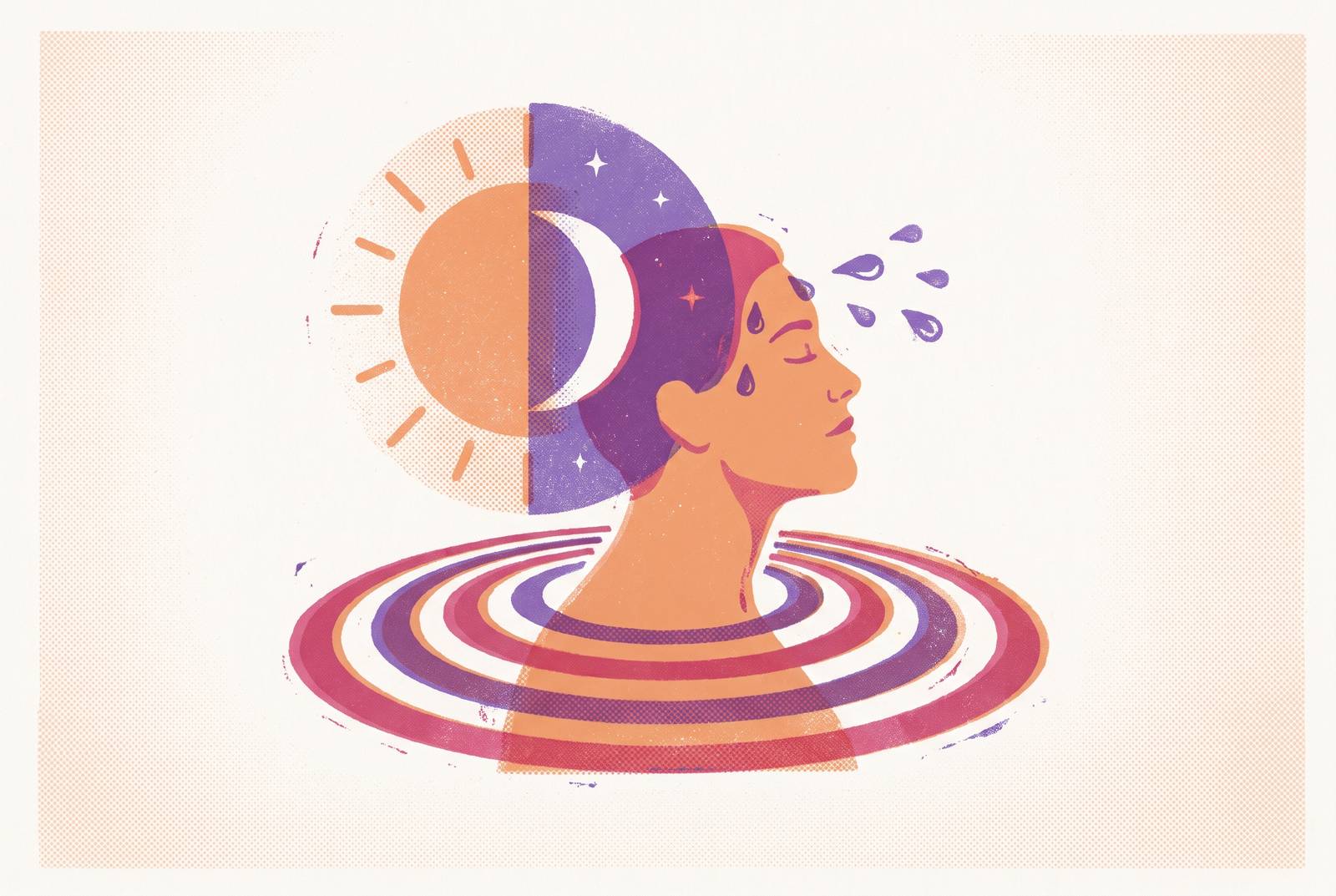
Perimenopause is the hormonal transition toward menopause, and vasomotor symptoms (VMS), including hot flashes and night sweats, can signal it before periods become irregular. In your 40s, these symptoms are biological evidence worth discussing. Symptoms, cycle history and, where useful, hormone results together can tell more about what is happening than a single blood test can.
Why VMS in your 40s are a biological signal, not a byproduct
Sudden heat at 3 a.m. or a drenching sweat before a meeting can seem to have little to do with reproductive health when periods still arrive on schedule. The familiar assumption that perimenopause begins with irregular cycles leaves little room for symptoms that appear first. A hot flash can be a signal of changing hormonal regulation, rather than an isolated episode of the body misfiring.
A Monash University–led study published in The Lancet Diabetes & Endocrinology in 2025 found moderate to severe VMS nearly five times more prevalent in perimenopause than in premenopause. Across more than 5,500 women aged 40–69, VMS showed the strongest specificity of any symptom measured. The study also identified women with regular cycles, changed menstrual flow and VMS whose symptom profiles were indistinguishable from those of early perimenopausal women. Changes in the body may already be underway before cycles meet the criteria used by the STRAW+10 staging framework.
Does every midlife symptom tell as much about the transition? The study suggests a more selective interpretation. Vaginal dryness was the most discriminative sexual symptom, occurring substantially more often in perimenopause than in premenopause, while poor memory was only modestly more common. VMS and vaginal dryness therefore emerged as clearer early flags than memory complaints alone. How well a symptom tells the stages apart says little about how distressing it feels or whether it needs care.
What the hypothalamus is actually doing when a hot flash strikes
The heat is felt in the body, but its control begins in the brain. The hypothalamus, which regulates temperature, works somewhat like a thermostat. Declining estrogen can destabilize that thermostat and narrow the range within which small temperature shifts are tolerated. Changes that a premenopausal brain would ignore can then trigger a hot flash or sweat.
Within the hypothalamus, kisspeptin/neurokinin B/dynorphin circuits, shortened to KNDy circuits, help explain this sensitivity. Emilė Radytė and Ieva Karvelyte’s 2026 perspective in Frontiers in Global Women’s Health places these circuits at the center of VMS. They are also modulated by neurokinin-3 receptor antagonists, linking the mechanism to a treatment target. Blood vessels participate in the bodily experience, but VMS are not simply a peripheral vascular side effect.
Why, then, might a blood test look normal? The authors argue that brain-mediated changes can precede and outlast peripheral hormonal markers, while systemic hormone levels do not capture the full variation between individuals. Their framework also links hypothalamic bioenergetic disruption to brain fog, word-finding difficulty and reduced processing speed that occur at the same time. As a perspective, this offers a mechanistic framework for possible hormonal contributions to cognitive symptoms.
Why progesterone falls first and what that means for the symptom sequence
The thermostat explanation raises an apparent contradiction. If a fall in estrogen helps cause hot flashes, why can symptoms begin while estrogen is still normal or even high? Progesterone can fall before estrogen does, altering the hormonal environment while menstrual timing still looks familiar.
In early perimenopause, roughly ages 42–46, the corpus luteum becomes less reliable as ovarian reserve diminishes, and progesterone output falls. Estrogen may remain stable or rise, creating relative estrogen dominance. Here, “relative” is the important word to retain. It describes how the hormones compare with each other, without showing that estrogen itself is always too high. The more familiar pattern of dramatic estrogen swings followed by decline belongs specifically to late perimenopause.
The authors’ brain-first framework describes this process as a loss of cyclical predictability. In that account, progesterone-driven loss of inhibitory neurosteroidal tone precedes estradiol variability. Put more plainly, a calming hormonal influence changes before the later estrogen pattern becomes established. This helps explain why “low estrogen” is an incomplete description of early symptoms. It also leaves room for substantial differences in when symptoms emerge.
Mood changes add another layer to interpretation. Women in the transition experience substantial day-to-day estradiol variability and an elevated risk of depression, yet irritability is the primary complaint for most of those with affective symptoms. Looking only for classic depression can therefore miss how the change is expressed. With several hormones changing at different times, what can a blood sample show?
Can hormone testing tell you whether VMS in your 40s mean perimenopause?
No single hormone test confirms perimenopause. A blood draw can describe a moment, while clinical assessment concerns a transition over time. The NHS, Mayo Clinic and Cleveland Clinic state that women over 45 with typical symptoms do not need hormone testing for a clinical diagnosis. Testing is most useful under 40 to assess premature ovarian insufficiency. Symptoms in the 40s are therefore evidence in their own right.
When testing is clinically useful, Day 2–4 FSH plus estradiol is the most informative single panel described here. FSH above 25–30 mIU/mL often suggests perimenopause, but levels can move from elevated to near-normal between cycles. A normal result does not rule it out. Early-cycle estradiol above 80 pg/mL can suppress FSH, making the result falsely reassuring. Estradiol is especially volatile and is least informative when tested in isolation.
AMH addresses a related but different question. It reflects ovarian reserve and is more stable across the cycle than FSH, making it useful for understanding the trajectory toward the final menstrual period. It does not diagnose perimenopause. Its interpretation belongs with FSH, estradiol and the clinical history. Repeated measurements, when appropriate, can reveal change that a single draw misses.
Contraception adds another constraint to this interpretation. Hormonal pills and hormonal IUDs can alter the natural hormonal or bleeding picture, complicating assessment of the underlying transition. Standard testing may not accurately reflect perimenopausal status in that setting. What a result within a reference range can tell depends on cycle timing, symptoms and contraception.
Why VMS in your 40s are routinely missed or explained away
STRAW+10 defines perimenopausal stages primarily through menstrual changes, creating a recognition gap for those with regular cycles and early VMS. The Monash study exposes that gap directly. Someone can have the symptoms of early transition before their bleeding follows the expected pattern. This is a limitation of the framework.
Biote’s “Perimenopause Focus” survey, conducted among U.S. women in August 2025, found that a large proportion felt they had been misdiagnosed when seeking care for perimenopause symptoms. Over half said they had been treated for depression, anxiety, mood swings or panic attacks since entering perimenopause, including roughly one in three who had been diagnosed with anxiety. Those reports require careful interpretation, however. Treatment for anxiety or depression does not by itself establish a mistaken diagnosis, because these conditions can coexist with the transition.
The same survey found that only a minority of clinicians initiated perimenopause discussions, while most respondents felt inadequately informed at symptom onset. More than half said their provider never suggested a hormone blood test. That finding is not, by itself, evidence of inadequate care, since typical symptoms after 45 often need no laboratory confirmation. Whether symptoms received a coherent explanation and appropriate assessment reveals more about the quality of care.
A 2026 international study involving more than 17,000 women found significant gaps between the symptoms women recognized as perimenopausal and those they experienced. Recognizing perimenopause more often calls for thinking of it earlier while also looking at other causes of symptoms. For women seeking answers, that means bringing their pattern of symptoms to a clinician who can also check for other causes.
Conditions that share VMS-like symptoms and how to distinguish them
Hyperthyroidism can cause hot flashes, anxiety, sleep disruption and a racing heart that feel much like the symptoms blamed on perimenopause. The timing can overlap as well. Thyroid disease peaks in the same decade that perimenopause begins, making age alone a poor discriminator. With perimenopause, cycles tend to drift and vary, while thyroid dysfunction more often causes a lasting change in flow or how often periods come. These are clues rather than diagnostic rules, and TSH belongs in an initial workup.
Polycystic ovary syndrome, or PCOS, creates a different interpretive problem because it is a chronic endocrine condition that does not resolve at midlife. Perimenopause can add to its ongoing symptoms. Women with PCOS remain at cardiometabolic risk through the peri-postmenopausal years and may continue to experience signs such as hirsutism. A new symptom does not erase that history. Distinguishing overlapping hormonal changes requires longitudinal data.
Iron deficiency and anemia can overlap with perimenopause through brain fog, fatigue, mood shifts and disrupted sleep. Those complaints alone cannot identify the cause. Sleep disruption that is severe or longstanding enough to suggest sleep apnea also should not be attributed to perimenopause by default. Otherwise, blaming hormones can seem to make sense but delay finding another condition. These are reasons for clinician-reviewed assessment.
What separates these possibilities is often their course over time. Changes in cycles, when symptoms start, how long they last and hormone results each give a different piece of evidence. No symptom checklist or snapshot blood test can reliably sort every overlap. A longitudinal history gives the clinician something more discriminating than a collection of familiar midlife complaints.
How to bring VMS evidence into a clinical conversation and get it heard
Clinicians recommend bringing a detailed symptom timeline with approximate dates, a cycle history covering the past two to three years, and personal and family thyroid and autoimmune history. This gives new symptoms a place within a longer record. It also helps distinguish a recent change from a longstanding pattern. The purpose is not to prove a diagnosis before the appointment, but to give the clinical discussion a clear starting point.
Framing new-onset hot flashes as a possible diagnostic signal can make that discussion more actionable than describing discomfort alone. The opening can identify when the flashes began and ask whether they could indicate perimenopause. Quality of life still deserves attention in its own right. The discussion can also explore what the symptoms reveal about the transition, even when periods remain regular. If testing is proposed, the discussion can also address what the result would clarify and what it could not exclude.
Professor Susan Davis, the Monash study’s senior author, recommends considering VMS as a diagnostic criterion when menopause cannot be distinguished by the bleeding pattern. Her examples include hysterectomy, endometrial ablation and use of a hormonal IUD. That recommendation has a specific scope, however. It is not a blanket declaration that any hot flash with regular periods establishes perimenopause. For women with regular cycles, the study’s finding about changed flow and VMS is the more directly relevant evidence to discuss.
If a provider does not engage with the symptoms, experts encourage continuing to seek care until someone does. The goal is a reasoned assessment. New VMS should be weighed as signs of hormonal transition, while thyroid disease, PCOS and other causes stay in view when the history points to them. A useful clinical conversation can hold both possibilities without dismissing the signal or treating it as a diagnosis on its own.